Shadow lamp vs lithophane: which should you 3D print?
Both turn a picture into a glowing 3D print, so people mix them up. They work in opposite ways, though, and they suit different pictures and make different gifts. Here's how I'd choose.
How a lithophane works
A lithophane is a thin plate whose thickness changes across the image. Thin spots let more light through, so they look bright. Thick spots look dark. Lit from behind, it shows a detailed photo, which is why it's so popular for portraits and memories. You'll need fine layer control and light-coloured filament.
How a shadow lamp works
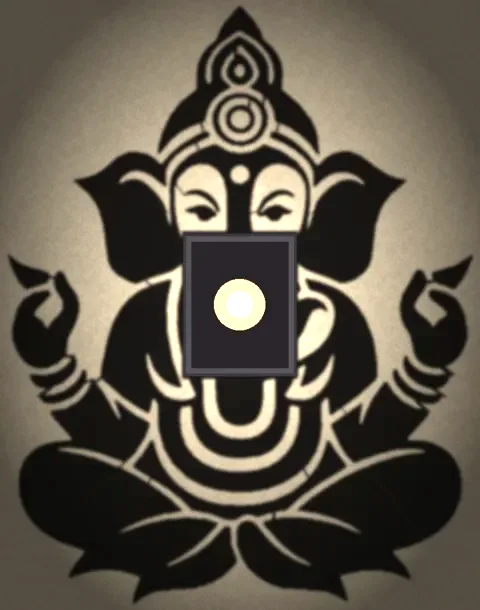
A shadow lamp, also called a shadow box lamp or wall shadow lamp, is a small open box with an LED on a tube. The wall panels have your silhouette cut out of them. Light passes through the cuts and throws a large shadow on the wall. The picture isn't on the plastic at all. That's why you need a bold, clear shape.
Side by side
- Best picture: lithophane for photos and faces; shadow lamp for silhouettes, characters, pets, names and logos.
- Where the image appears: lithophane on the plate itself; shadow lamp on the wall, much larger than the lamp.
- Filament: lithophane needs light, translucent plastic; shadow lamp works best with dark opaque PLA or PETG.
- Print: lithophane is one plate; shadow lamp is a small box of panels, or one fused print.
- Light: lithophane needs a flat, even backlight; shadow lamp needs one small warm LED.
- Look in daylight: a lithophane shows its image only when lit; a shadow lamp looks like a plain box until it's switched on.
Which should you choose?
Pick a lithophane for a portrait, a wedding photo or a pet photo where detail matters. Pick a shadow lamp when the subject is a strong shape: an anime hero pose, a superhero logo, a pet profile, a name, mountains or a Halloween skull. Soft shading won't survive as a shadow. A clean outline, on the other hand, looks better as a shadow lamp than it ever would on a flat plate, and you don't have to fight with layer heights.
What each one needs from your printer
A lithophane lives or dies on layer height. I print them at 0.1 mm layers with 100% infill, standing upright so the thickness steps come out smooth, and slow the print to 30 or 40 mm/s so the thin areas don't tear. White or natural PLA works best. Strong pigment flattens the contrast, so skip it. Expect 3 to 6 hours for a 100 mm plate.
A shadow lamp is far more forgiving. The panels are 1.2 to 2 mm thick and print flat on the bed, and 0.2 mm layers are fine. All you really care about is that no light leaks through the plastic, so use a dark opaque filament and at least four perimeters. I go with black PLA at 0.2 mm, 20% infill, no supports. A 150 mm box takes me about 2 hours per panel.
Light source
A lithophane wants an even panel of light behind it, otherwise you'll see the LED hotspot through the image. A short strip of LED tape in a frame works, and so does a USB light panel. A shadow lamp is the opposite. The sharper the point of light, the sharper the shadow. One small warm LED on a tube gives the cleanest outline. A frosted bulb turns the shadow into a blur, and two LEDs give you two overlapping shadows.
Which picture survives the conversion?
Before you print anything, squint at the image. If it still reads when you reduce it to pure black and white with no grey, it'll work as a shadow lamp. A pet in profile, a bike, a temple outline, a name in a bold font: all fine. A face looking at the camera, a landscape with sky and sea, a photo with shadows across it: those need the grey levels. Print them as a lithophane instead.
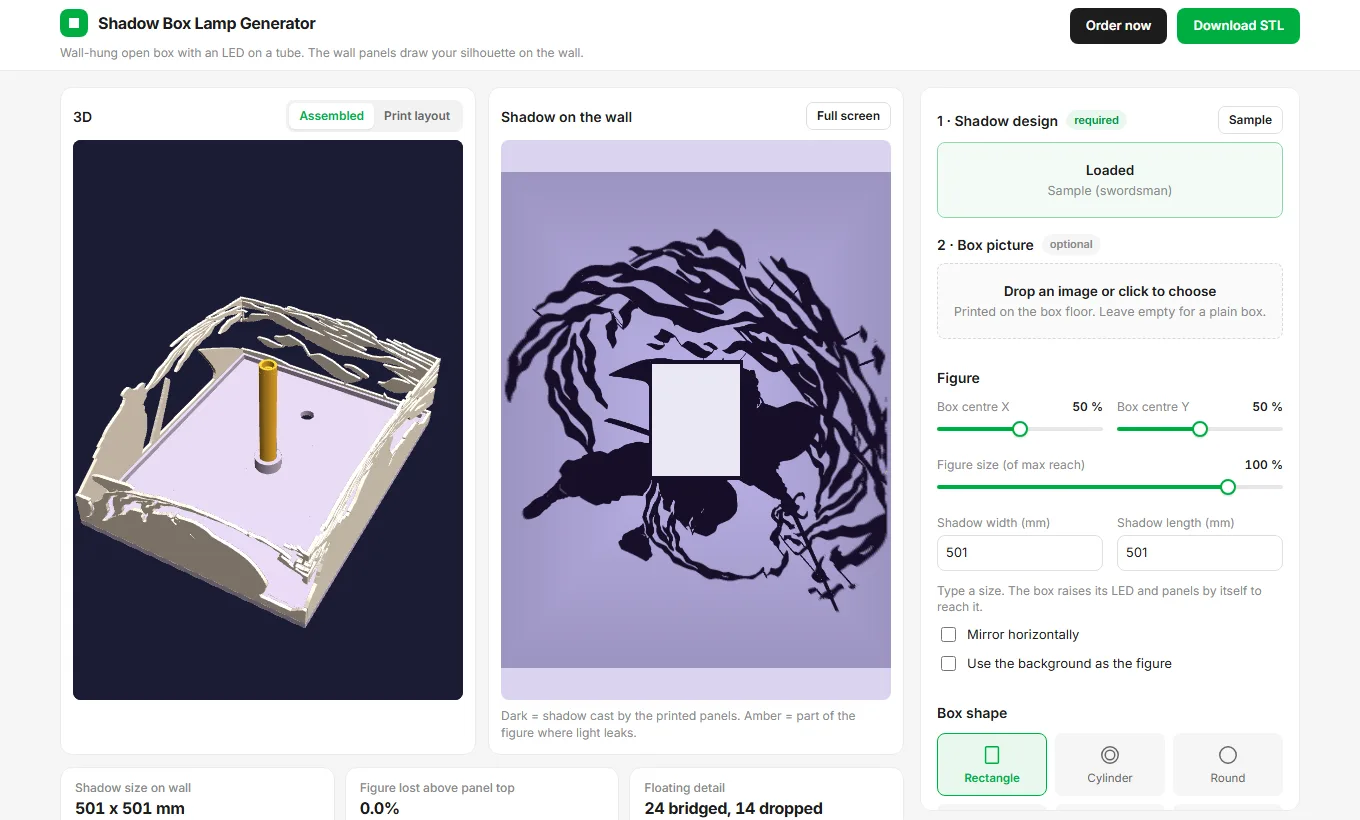
The quick test? Drop the picture into the generator. It shows the wall shadow before you spend any filament. If the preview looks like a blob, it isn't a shadow lamp picture, however good the photo is.
Make a shadow lamp for free
The free Shadow Box Lamp Generator turns a photo, PNG, JPG, WEBP or SVG into a print-ready STL. It shows the wall shadow before you print, and you can pick from seven box shapes. If you want the steps, read how to make a shadow lamp from any picture, or just open the tool directly.
Frequently asked questions
Is a shadow lamp the same as a lithophane?
No. A lithophane is a thin plate that shows a photo when light shines through it. A shadow lamp blocks the light with cut panels and throws a silhouette on the wall.
Which is easier to 3D print?
A lithophane is a single flat or curved plate. A shadow lamp is a small box with several panels, but you don't need fine layer-thickness control, and any dark filament will do.
Can a shadow lamp show a photo of a face?
Not as a photo. A shadow lamp needs a bold, high-contrast silhouette. If you want a detailed face, go with a lithophane.
Which is a better gift?
Use a lithophane for a portrait or a memory photo. Use a shadow lamp for a character, pet, name or logo that reads clearly as a silhouette on the wall. That's the split I'd follow.
Topics: shadow lamp vs lithophane · lithophane vs shadow lamp · 3D printed night light · shadow box lamp · wall shadow lamp · lithophane lamp · custom night light gift